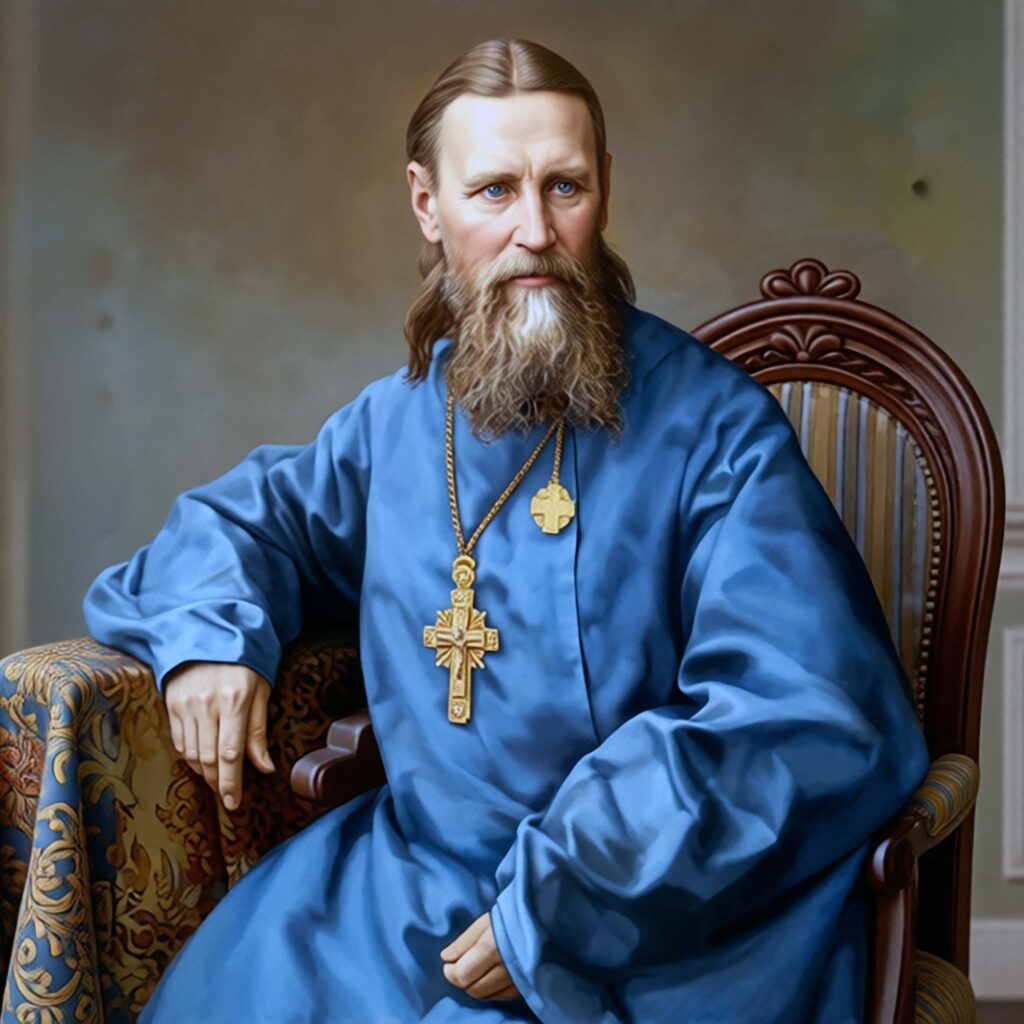
Saint Ioann of Kronstadt
Saint Ioann of Kronstadt: 31 October 1829 – 2 January 1909 was a Russian Orthodox archpriest and a member of the Most Holy Synod of the Russian Orthodox Church. He was known for his mass confessions, numerous miracles, and charitable work, as well as his monarchistic and anti-communist views.
Saint Ioann of Kronstadt is a saint of the Eastern Orthodox Church and is known with the epithet “Righteous”.
On November 1, 1964, he was canonized by the Russian Orthodox Church Outside Russia (ROCOR).
In 1990, after the beginning of perestroika and the liberalization of church life in the Soviet Union, John was canonized by the Moscow Patriarchate.

A Heart Patterned After Christ
From his youth, Ioann’s primary desire was to be an instrument of God. After struggling with his studies as a young boy, he experienced a moment of divine illumination that allowed him to excel, eventually graduating at the top of the St. Petersburg Theological Academy. While he initially considered missionary work in remote lands, he realized that the “pagans” needing Christ the most were the destitute, the alcoholic, and the broken living right in his own backyard.
To Ioann, following Jesus was not a theoretical exercise; it was a total immersion in love. He viewed every human being—regardless of their social standing or moral state—as a “priceless soul” and a brother in Christ. He took the Lord’s command to “sell what you have and give to the poor” with startling literalism. It was common for Father Ioann to leave his home wearing a warm coat and shoes, only to return barefoot and shivering because he had encountered someone whose need was greater than his own.
Seeing that simple almsgiving was not enough to break the cycle of poverty, Ioann’s service took on a systemic dimension. He founded the “House of Industry,” a massive complex that provided:
Workshops: Giving the unemployed a sense of dignity through labor.
Shelter: Housing for the homeless and a night asylum.
Education: A primary school for children and a library for adults.
Healthcare: A free dispensary and clinic for the sick.
Saint Ioann’s life was an echo of the life of Jesus: he healed the sick through prayer, fed the hungry, and offered a hand of friendship to the marginalized. His diary, My Life in Christ, remains a classic of Christian literature, teaching that the path to God is paved with “humble love.” Through his tireless service, he proved that even in a modern, cynical world, it is possible to live as a true image of the Savior.
The legacy of Saint Ioann of Kronstadt
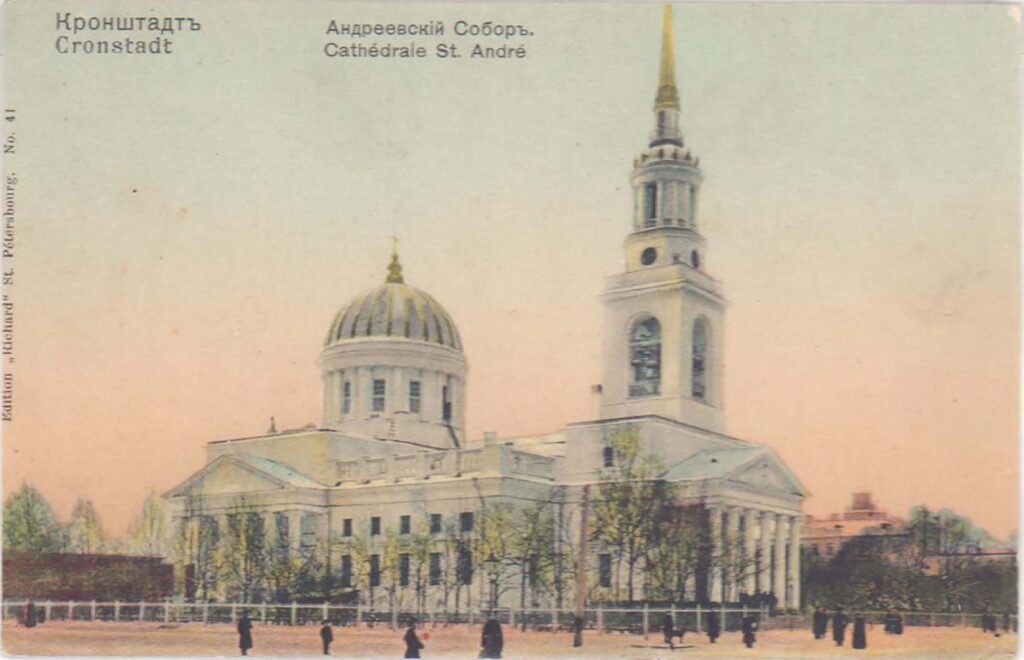
To understand the legacy of Saint Ioann of Kronstadt, one must look at how he revolutionized the role of a parish priest in 19th-century Russia. His merits weren’t just personal virtues; they were structural shifts in how the Church interacted with the world.
Here are the four main merits that define his life and ministry:
1
The Eucharistic Revival
Before Father Ioann, it was common for Russian Orthodox Christians to receive Holy Communion only once or twice a year. He viewed the Eucharist as the “source of life” and the primary way to be like Jesus. He championed frequent—even daily—Communion, transforming the Divine Liturgy from a distant ritual into a communal, life-giving encounter for thousands of people every day.
2
Radical, Organized Philanthropy
Father Ioann did not believe in “passive” charity. While he famously gave the very shoes off his feet to beggars, he also understood the need for systemic help. He founded the House of Industry, which provided:
Employment and vocational training.
A free hospital and pharmacy.
A library and a school for the poor.
By integrating social work with the parish, he modeled a Church that cared for the body as much as the soul.
3
The Power of Intercessory Prayer and Miracles
He was widely recognized as a “thaumaturge” (wonder-worker). His merit lay in his absolute, childlike faith that God hears every prayer. People from all over the world—including non-Christians—sent him thousands of telegrams daily asking for help. Countless documented healings of the blind, the lame, and the terminally ill occurred through his prayers, confirming his status as a “living saint.”
4
Renewal of Public Confession
Because so many thousands of people flocked to his services, Father John could not hear individual confessions for everyone. He revived the ancient practice of General (Public) Confession. This created an atmosphere of profound collective repentance where people would openly cry out their sins, leading to a massive spiritual awakening in Kronstadt and throughout Russia.
Saint Ioann of Kronstadt’s influence on the United States
Saint Ioann of Kronstadt’s influence on the United States was profound, despite the fact that he never set foot on American soil. His impact was felt through the missionaries he mentored, the spiritual books that reached American shores, and his direct financial support for the fledgling Orthodox missions in the New World.

Mentorship of American Missionaries
Father Ioann served as a spiritual beacon for the leaders who built the Orthodox Church in America.
Saint Tikhon of Moscow: Before becoming the Patriarch of Russia, Tikhon was the Archbishop of the Aleutians and North America (1898–1907). He was deeply influenced by Father Ioann’s “Eucharistic Revival”—the practice of frequent Communion—and implemented these pastoral reforms across the United States.
Saint Sebastian Dabovich: The first American-born Orthodox priest frequently corresponded with Father John. When Dabovich traveled to Russia to seek aid for the American mission, Father Ioann personally encouraged him and provided spiritual guidance for his work in California and the Midwest.

Financial Support for American Churches
Father Ioann was a “conduit of charity” for the global Church. He recognized that the American mission was destitute and struggling.
He donated significant sums of money—often thousands of rubles at a time—to help build churches in the United States and to support the Russian Mission in Alaska.
His generosity was so well-known that the Kentucky Post and other secular American newspapers reported on his philanthropic activities and his letters of support for suffering Christians abroad.

Literary Influence: My Life in Christ
Father Ioann’s diary, My Life in Christ, was translated into English during his lifetime (the first English edition appeared in 1897).
This book became a staple for English-speaking seekers and converts in the U.S., offering a radical, “living” alternative to the more scholastic or formal religious texts of the era.
It helped bridge the gap between ancient Eastern spirituality and the modern Western mind, emphasizing that holiness was attainable for the common person, not just monks.
© RENAISSANCE OF FAITH 2026. No part of this site, renaissanceoffaith.com, may be reproduced in whole or in part in any manner without the permission of the copyright owner.